
Metal vs. Ceramic Braces: Which Is Better for Your Smile?
When comparing metal vs ceramic braces, neither option comes out on top in every category. Stainless steel metal braces remain the classic workhorse of orthodontics because they are tough, affordable,…
On this page
- Quick Comparison: Metal vs. Ceramic Braces
- Key Takeaways
- What Are Metal Braces? (How They Work & What to Expect)
- What Are Ceramic Braces? (How They Work & What to Expect)
- Do Ceramic Braces Stain Easily? (The Truth About Discoloration)
- Metal vs Ceramic Braces Cost: What’s the Real Difference?
- Which Is More Comfortable and Faster?
- Daily Care & Maintenance: Cleaning Metal vs. Ceramic Braces
- Who Are Metal Braces Best For?
- Who Are Ceramic Braces Best For?
- Orthodontics at 97 Smiles: What to Expect
- Metal vs. Ceramic Braces: How to Make Your Final Decision
- Ready to find your match?
- Frequently Asked Questions
When comparing metal vs ceramic braces, neither option comes out on top in every category. Stainless steel metal braces remain the classic workhorse of orthodontics because they are tough, affordable, and handle heavy tooth movements easily.
Ceramic braces offer a subtle, tooth-colored look that blends in with your natural enamel, but they require a bit more care around stain-causing foods and rough sports.
Both systems rely on the same fundamental technology to shift your teeth into alignment. Here is an honest look at how metal and ceramic braces stack up across appearance, durability, comfort, cost, and daily maintenance so you can make the right call for your mouth.
Quick Comparison: Metal vs. Ceramic Braces
| Feature | Metal Braces | Ceramic Braces |
| Look | Dark silver or stainless steel brackets | Tooth-colored or clear brackets that blend in |
| Stain Resistance | Completely stain-proof material | Brackets don’t stain, but elastic ties can discolor |
| Durability | High strength; very hard to break or chip | Strong, but more brittle than metal under hard pressure |
| Best For | Heavy crowding, severe bite issues, kids, and athletes | Mild to severe cases for image-conscious adults and teens |
| Average Cost | $3,000 to $6,000 | $4,000 to $7,000 |
| Daily Maintenance | Standard bracket brushing and thread flossing | Requires extra care with dark foods and crunchy bites |
Key Takeaways
- Ceramic braces prioritize aesthetics. If you want the full-time straightening power of fixed brackets without high-visibility metal, tooth-colored ceramic is a strong choice.
- Metal braces offer maximum durability. They handle accidental bites on hard foods much better than ceramic, making them ideal for kids, teens, and contact sports players.
- Staining is about the ties, not the brackets. Ceramic brackets themselves will not turn yellow, but clear rubber bands around them can stain if you consume coffee, tea, or dark sauces.
- Combining both is a popular middle ground. Many patients put subtle ceramic brackets on their top teeth where they show most, and durable metal brackets on the bottom.
What Are Metal Braces? (How They Work & What to Expect)
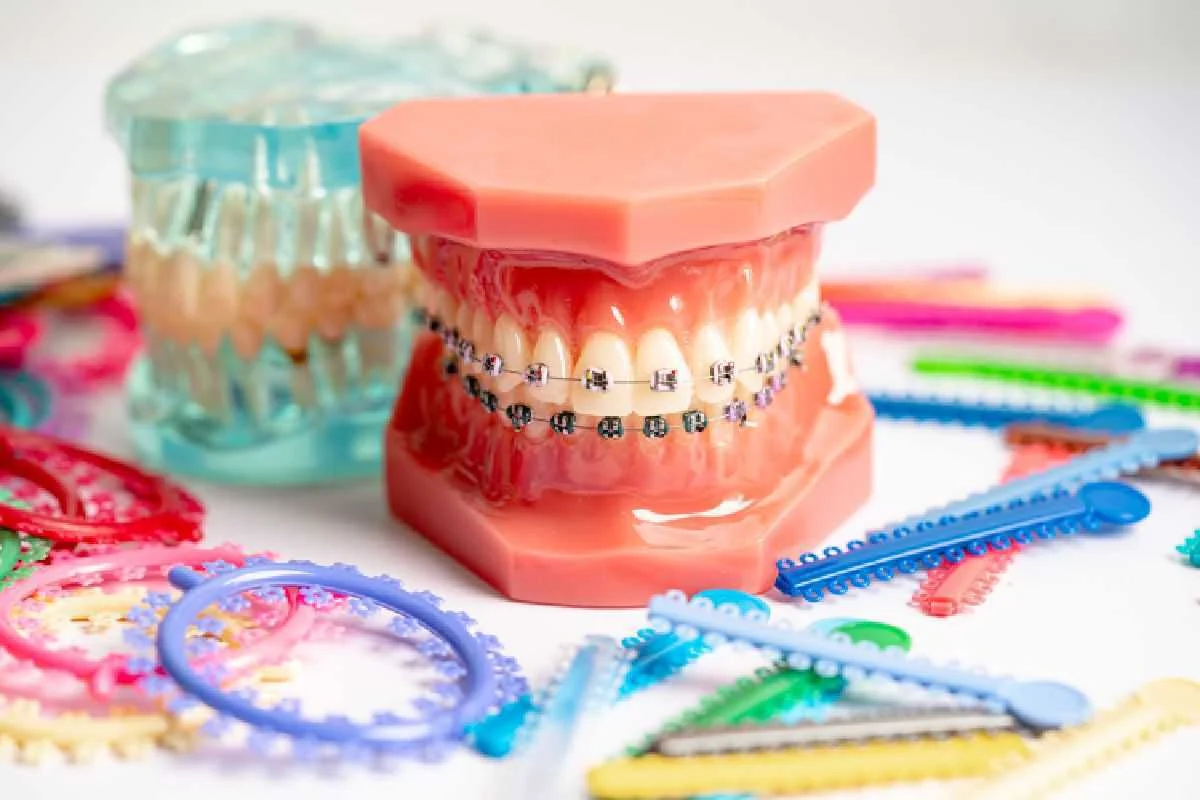
Traditional metal braces use high-grade stainless steel brackets glued to the front of each tooth, connected by a flexible archwire. Small rubber bands (ligatures) hold the wire inside each bracket slot.
The Patient Experience
Metal brackets are compact, flat, and reliable. You will feel a firm pressure against your teeth for a few days after adjustments, but the metal itself is smooth and predictable. Younger patients often enjoy choosing colorful rubber bands, like neon green or purple, at every checkup to show off their personality.
Pros & Trade-offs
The biggest advantage of metal braces is sheer toughness. They rarely chip or snap, meaning fewer unexpected emergency visits to reattach broken pieces. They are also the most cost-effective option available. The obvious trade-off is visibility: metal brackets stand out clearly whenever you laugh, talk, or take a picture.
What Are Ceramic Braces? (How They Work & What to Expect)
Ceramic braces function exactly like metal braces, but the brackets are made from clear or tooth-colored polycrystalline ceramic.
To keep the look low-profile, your dentist can pair ceramic brackets with tooth-colored archwires and clear elastic ties, making the entire appliance blend smoothly into your teeth.
The Patient Experience
From a distance or on video calls, ceramic braces are remarkably hard to spot. People might notice you are wearing something on your teeth up close, but they won’t see a high-contrast flash of silver.
Pros & Trade-offs
Ceramic brackets give you a subtle appearance without needing to take out trays like clear aligners. However, ceramic is slightly more brittle than steel. To make up for this, ceramic brackets are designed slightly larger and rounder than metal brackets, which can feel a bit bulkier under your lips at first.
Do Ceramic Braces Stain Easily? (The Truth About Discoloration)
One common fear about ceramic braces is that they will turn yellow or brown halfway through treatment.
The good news is that modern ceramic brackets are completely non-porous and stain-resistant. Wine, coffee, mustard, and tomato sauce will not stain the ceramic material itself.
However, the clear or white rubber bands used to hold the wire inside the ceramic brackets can absorb pigments from food and drink. If you consume lots of curry, coffee, or dark berries, those clear ties can turn yellowish between visits.
Fortunately, your dentist replaces these elastic ties at every routine adjustment (usually every 4 to 6 weeks). If your ties do get discolored, you won’t have to live with it forever. Switching to wire ties or darker-colored bands can eliminate staining concerns entirely.
Metal vs Ceramic Braces Cost: What’s the Real Difference?
Ceramic braces generally cost slightly more than traditional metal braces.
- Metal Braces Average Cost: $3,000 to $6,000
- Ceramic Braces Average Cost: $4,000 to $7,000
The price gap comes down to the materials used and the extra care required during manufacturing. Ceramic brackets require precise molding to achieve strength while remaining transparent.
Insurance and Payment Options
Most dental insurance plans with orthodontic coverage treat metal and ceramic braces similarly, paying a fixed lifetime maximum toward your care regardless of which bracket material you select.
At 97 Smiles, we believe financial concerns shouldn’t stand in the way of feeling confident during treatment. We offer clear pricing, low down payments, and flexible financing to keep monthly payments within your budget.
Which Is More Comfortable and Faster?
When it comes to daily comfort and overall treatment speed, both materials perform exceptionally well, though there are subtle differences.
Daily Comfort
Metal brackets are smaller and sit slightly lower on the tooth surface, making them easy for your lips and cheeks to adapt to. Ceramic brackets are slightly bulkier to ensure they stay strong, which can cause mild rubbing on the insides of your lips during the first couple of weeks. Dental wax easily smooths out any temporary rough spots for both types.
Treatment Speed
Metal braces generally move teeth slightly faster in complex, heavy-torque cases. Metal wires slide through metal bracket slots with very low friction. Ceramic brackets create slightly more friction against metal wires, which can occasionally add a few weeks to complex treatment timelines. For mild to moderate adjustments, however, treatment times are virtually identical.
Choosing the right appliance starts with finding a care team that listens to your personal priorities. Looking for a dentist? Check out our article on how to find and choose a good dentist for yourself or your family.
Daily Care & Maintenance: Cleaning Metal vs. Ceramic Braces
Braces create extra nooks and crannies where food debris can hide, so keeping up with daily oral hygiene is crucial for avoiding white spots or gum irritation.
Eating and Food Habits
With metal braces, you still need to avoid extremely hard, sticky, or chewy foods (like whole apples, ice, or caramel) that can pop brackets off. With ceramic braces, you need to be even more cautious with hard foods, as biting down directly on something tough can shatter or chip a ceramic bracket.
Daily Hygiene Realities
Cleaning Metal Braces:
1. Brush thoroughly around all steel brackets
2. Thread floss under the archwire
3. Rinse away food particles
Cleaning Ceramic Braces:
1. Brush carefully around larger ceramic brackets
2. Thread floss under the archwire
3. Rinse thoroughly after eating dark foods to avoid tie staining
Brushing and Flossing
Brushing and flossing routines are identical for both systems. You will use a standard soft-bristled brush, thread floss beneath the archwire using a floss threader, and clean around brackets using an interdental brush. If you wear ceramic braces, rinsing your mouth with water right after eating dark sauces helps keep your clear ties looking fresh.
Good daily habits keep your teeth clean and prevent staining around brackets during treatment. Learn how to simplify your routine with What Is the 50-40-30 Rule in Dentistry?
Who Are Metal Braces Best For?
Metal braces are usually the ideal recommendation if you:
- Want a tough, worry-free system that can handle accidental bumps or crunchy foods
- Have severe crowding, rotated teeth, or a complex bite misalignments
- Play contact sports or participate in high-impact activities
- Want the most budget-friendly treatment option
- Are buying braces for a child or teen who wants to customize their smile with colorful bands
Who Are Ceramic Braces Best For?
Ceramic braces are generally the top pick if you:
- Want a subtle, low-profile treatment that doesn’t stand out in professional settings
- Prefer fixed brackets over removable aligners because you don’t want to track wear hours
- Have mild to moderate tooth alignment needs
- Don’t mind being mindful around extra-hard foods and dark-pigmented drinks
Orthodontics at 97 Smiles: What to Expect
Straightening your teeth is an investment in your confidence and health. You deserve an experience that feels straightforward, open, and completely tailored to your life.
When you come in for an orthodontic visit at 97 Smiles, here is how we care for you:
- Clear, pressure-free consultations: We perform 3D digital scans of your teeth to show you exactly how your smile moves. We walk you through both metal and ceramic options fairly without pushing you toward higher-priced treatments.
- Upfront pricing and flexible financing: We lay out all costs before work begins—no hidden add-ons midway through care. With options starting at $97 and customized monthly payment plans, quality orthodontic care stays accessible.
- Modern technology in a relaxed space: We use digital impressions instead of messy, uncomfortable putty trays, ensuring your checkups are smooth, fast, and precise.
- Multiple convenient locations: Routine adjustments are quick and easy to schedule at a nearby office, so you don’t have to rearrange your entire week for a quick checkup.
Metal vs. Ceramic Braces: How to Make Your Final Decision
Making your choice comes down to what you value most during your treatment: complete durability and lower cost, or a subtle, discreet appearance.
If you want a time-tested, budget-friendly option that works hard without needing extra caution around food, metal braces are a fantastic choice. If you want a subtle appliance that lets your natural teeth shine through during meetings, events, or school, and you don’t mind taking extra care with dark foods, ceramic braces are well worth the upgrade.
The best way forward is to see how both options look against your teeth in person.
Ready to find your match?
At 97 Smiles, we offer clear treatment plans, simple financing, and options starting at $97. Schedule your consultation today to see which option fits your smile best.
Frequently Asked Questions
Are ceramic braces less painful than metal braces?
No, the level of pressure is roughly the same. Both metal and ceramic braces shift teeth using light, continuous force, which causes mild tightness for a few days after adjustments regardless of bracket material.
Can you put ceramic braces on top teeth and metal on bottom teeth?
Yes! Mixing metal and ceramic is a very popular choice. Patients often choose clear ceramic brackets for their top teeth where they are most visible, and durable metal brackets for their lower teeth to save on cost and improve durability.
Do ceramic braces break more easily than metal braces?
Ceramic is a very hard material, but it is more brittle than stainless steel. While ceramic brackets rarely break during normal chewing, biting directly into hard foods (like nuts or hard candy) carries a higher risk of chipping a bracket compared to metal.
Do ceramic braces take longer to straighten teeth?
For most mild to moderate alignment cases, treatment speed is identical. In very complex cases involving heavy tooth rotations, metal braces can sometimes finish slightly faster because there is less friction between metal wires and metal bracket slots.


